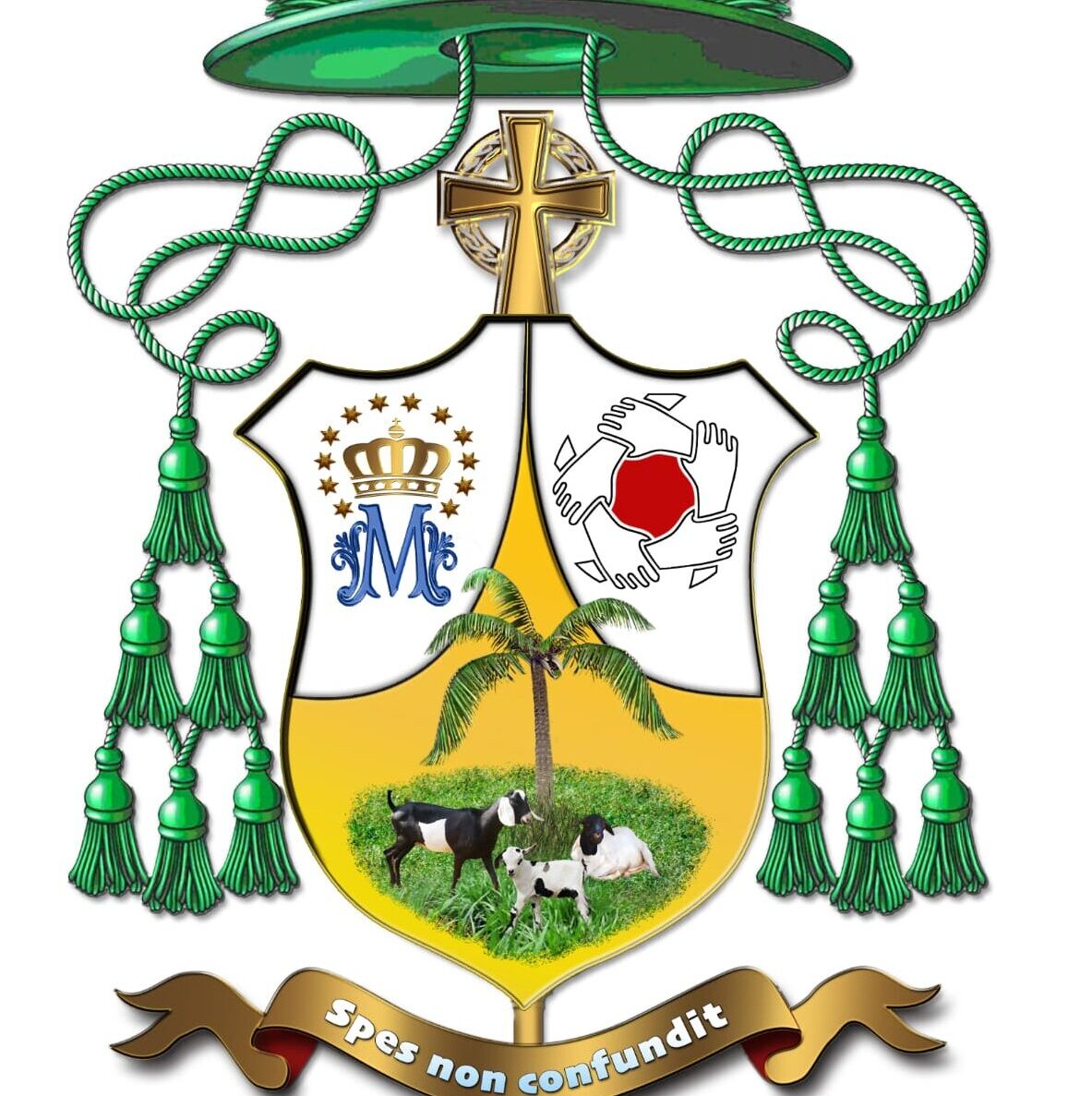
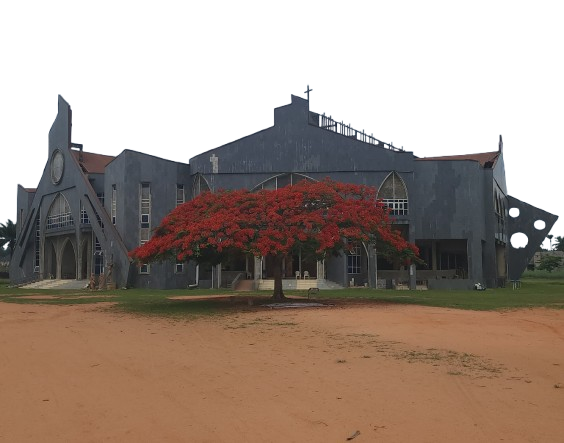
About the Diocese
The Diocese of Ahiara, (From the territory taken, commonly called Mbaise, from the Diocese of Owerri, a new diocese is erected, which shall be called the Diocese of Ahiara) Maria Mater Ecclesiae, is one of the ecclesiastical territories within the Catholic Church in Nigeria. It is good to note that its journey has been marked by remarkable growth yet profound challenges. It was canonically erected on 18 November 1987 by Pope John Paul II through the papal bull Dominici gregis. The new diocese was carved out of the Diocese of Owerri, signifying the rapid expansion of Catholicism in southeastern Nigeria and the pastoral need to bring Church administration closer to the faithful in the Mbaise region. At its establishment, the Diocese of Ahiara was made a suffragan of the Archdiocese of Onitsha, one of Nigeria’s oldest ecclesiastical provinces. However, in recognition of regional ecclesiastical alignment, it was transferred on 26 March 1994 to the newly elevated Archdiocese of Owerri, under which it has since remained.
The first bishop, Most Reverend Victor Adibe Chikwe (1987–2010) installed on Sunday January 31, 1988 , played a foundational role in shaping the identity and structure of the diocese. Under his episcopal leadership, Ahiara experienced: An Institutional consolidation as evident in the establishment of parishes, seminaries, (Mater Ecclesiae Seminary and St. Mulumba Spiritual Year Seminary) and diocesan offices., Clerical formation and recruitment as evident in promoting vocations among the Mbaise youth, which led to a growing indigenous clergy, Pastoral expansion through outreach programmes, educational initiatives, and community development efforts and Cultural integration of faith where the premier Bishop emphasized a distinctly Mbaise Catholic spirituality, fusing universal Catholic tradition with local expressions of faith, music, and community life in the light of Second Vatican Council. His long episcopacy of 20 years provided stability, during which Ahiara became known for its vibrant liturgical life, high Mass attendance, and strong participation in religious movements. The early years of the diocese can thus be described as a period of growth and consolidation, when structures of evangelisation, catechesis, and education were firmly rooted.
However, a major historical rupture occurred following Bishop Chikwe’s death in 2010. After a two-year interregnum, Pope Benedict XVI appointed Most Reverend Peter Ebere Okpaleke as bishop in December 2012. His appointment, however, sparked intense and unprecedented controversy. The controversy quickly became a symbol of deeper issues within the Nigerian Church. The conflict escalated to a global Catholic issue, attracting attention from Vatican agencies and international media. Eventually, Bishop Okpaleke resigned in 2018 without ever taking canonical possession of the diocese. The Holy See subsequently appointed an Apostolic Administrator, Bishop Lucius Ugorji of Umuahia (later of Owerri), to govern Ahiara temporarily. This period (2018–2024) became one of pastoral healing, administrative reorganisation, and quiet rebuilding.
The Year from 2018-2024, could be regarded as the period of the apostolic administration. This period served as a time of reflection, renewal, and gradual restoration of trust. On 3 May 2024, Pope Francis appointed Most Reverend Simeon Okezuo Nwobi, C.M.F., a member of the Claretian Missionaries, as the new bishop of Ahiara. His appointment marked a decisive turning point, widely received with joy and relief across the diocese. Bishop Nwobi’s missionary background and pastoral diplomacy positioned him as a bridge-builder capable of reconciling long-divided factions.
His leadership has been characterised by: unity and healing, emphasizing that there should be “no victor, no vanquished,” and that the clergy and laity must walk together in faith, Pastoral renewal intensifying evangelisation, priestly formation, and social apostolates, Structural revitalisation which saw the launching of new projects such as the Mater Media Village, strengthening diocesan communications and outreach and Collaborative leadership engaging priests, religious, and laity in strategic planning for the future of the diocese.The bishop’s inclusive approach has brought a renewed sense of hope and ownership among the faithful. His leadership signals not only administrative continuity but also a new pastoral vision anchored in reconciliation, service, and modern evangelisation.
In a word, the history of the Diocese of Ahiara encapsulates a microcosm of the broader Nigerian Catholic experience, a dynamic interplay of faith, culture, and identity. Its trajectory can be understood through three interpretative lenses: Growth and Consolidation which is the early decades under Bishop Chikwe established Ahiara as a centre of Catholic vitality, marked by institutional stability and vibrant faith, Conflict and Identity: Seen in the crisis revealed deep-seated tensions between universal ecclesiastical authority and local consciousness. And it exposed the challenge of integrating cultural identity within the unity of the Church and lastly, healing and Renewal: The post-crisis era, culminating in Bishop Nwobi’s appointment, represents a model of ecclesial reconciliation, where the diocese seeks to rebuild unity through humility, dialogue, and shared mission.
This three-phase evolution as seen in foundation, crisis, and renewal reflects not only the resilience of the Ahiara Catholic community but also the Church’s capacity for self-correction and pastoral adaptation. Today, Ahiara Diocese stands as a living witness to the possibility of forgiveness, reconstruction, and renewed mission within the body of Christ.
Geographical and Demographic Analysis of the Diocese
The Diocese occupies a distinctive position in southeastern Nigeria, within the Mbaise region of Imo State. Geographically, it covers a compact area of approximately 425 square kilometres, making it relatively small by Nigerian diocesan standards. It is good to note that despite its limited size, the territory is highly significant both religiously and culturally, as Mbaise is renowned for its deep-rooted Catholic identity, Cultural authenticity, communal solidarity, and emphasis on education and moral formation.
The compact geographical layout of the diocese allows for more efficient pastoral coordination and close interaction between clergy and laity. Parishes are often within manageable distance from one another, facilitating easier mobility for priests and enabling more frequent diocesan gatherings, pastoral visits, and inter-parish collaboration. This geographical compactness also supports a strong sense of ecclesial unity, where communities identify not only with their local parishes but with the diocese as a shared spiritual home. Furthermore, the topography and infrastructure of the region characterised by accessible road networks, fertile land, and a mixture of rural and semi-urban settlements enhance pastoral outreach. The area’s social homogeneity (predominantly Mbaise ethnic identity) provides cohesion, but also requires pastoral sensitivity to issues of representation and inclusion, given the historical tensions surrounding episcopal appointments.
In essence, the geography presents a model of manageable pastoral scale, offering both proximity and cohesion which are conditions favourable for evangelisation, catechesis, and community-based ministry.
The demographic profile of the Diocese of Ahiara highlights its status as one of the most Catholic-dominated territories in Nigeria. Statistical records reveal a consistent pattern of population growth alongside a slightly declining Catholic percentage (………) …………….. . This data indicates an absolute increase in Catholic numbers but a relative decline in Catholic proportion, likely resulting from several interrelated factors as in Population expansion and urbanisation, leading to greater demographic diversity in the region, Migration and intermarriage, which introduce new religious affiliations, especially Protestant and Pentecostal movements and variations in statistical reporting, as Catholic membership records often lag behind actual community growth or movement. Despite this relative decline, the Catholic population remains overwhelmingly dominant, giving Ahiara one of the highest Catholic densities in Nigeria. This strong demographic base underpins vibrant parish life, high sacramental participation, and active lay involvement.
The pastoral landscape of Ahiara has undergone remarkable expansion since the diocese’s erection in 1987. In 1990, only 52 diocesan priests served approximately 331,000 Catholics, averaging one priest per 6,373 faithful. This limited manpower reflected the diocese’s early developmental stage, when most parishes were large and sparsely distributed. By 2022, however, the clerical strength had grown to about priests (diocesan and religious combined), ministering across over 80 parishes. This represents not only a quantitative increase but also qualitative improvement in pastoral coverage and access to the sacraments. The creation of new chaplaincies such as the Holy Family Chaplaincy at Aboh Junction (2025) demonstrates the diocese’s commitment to pastoral proximity and responsive ministry to emerging communities.
Ahiara’s high Catholic concentration is both a strength and a challenge. On one hand, it fosters strong Catholic identity, rich liturgical life, and intense community involvement in parish activities. On the other hand, it generates high expectations for leadership quality, transparency, and participation. The clergy are often looked upon not only as spiritual leaders but as social and moral anchors of the community. Furthermore, the region’s literacy rate and value for education have produced an articulate laity capable of engaging theological and pastoral issues critically. This has positive implications for lay ministry, catechetical work, and social engagement, but also requires that Church leadership remain consultative and inclusive.
The interplay between tradition and modernity is evident: while many families maintain traditional Catholic devotions and rural parish affiliations, younger generations are increasingly influenced by digital culture, global mobility, and contemporary religious expressions. The diocese, therefore, faces the pastoral challenge of bridging generational gaps ensuring that faith remains relevant and dynamic in a changing social landscape.
From a pastoral and developmental standpoint, the geographical compactness and demographic density of the Diocese of Ahiara present several key opportunities like Enhanced pastoral reach seen in the proximity, here shorter distances and clustered communities allow priests to engage more frequently with their parishioners, again we see the existence of strong communal faith seen in the cultural solidarity of Mbaise that supports grassroots evangelisation and communal responsibility, lastlt we have the high evangelisation potential as the diocese is a the home of a large Catholic base which offers fertile ground for missions, vocations, and new apostolates.
The geographical and demographic profile of the Diocese of Ahiara underscores a dynamic and robust local Church compact in territory, dense in population, and deeply rooted in Catholic faith. Its growth trajectory demonstrates organisational maturity and pastoral resilience. However, to sustain this vitality, the diocese must continue prioritising clergy formation, lay leadership development, youth engagement, and strategic pastoral planning. The balance between consolidation and expansion between preserving the traditional strength of Mbaise Catholicism and embracing new forms of evangelization will determine Ahiara’s pastoral effectiveness in the decades ahead.
Structural Organisation of the Diocese
The Diocese of Ahiara, situated within the ecclesiastical province of the Archdiocese of Owerri, forms part of the Latin (Roman) rite of the Catholic Church . Its internal organisation reflects the universal pattern of Catholic diocesan governance, while also bearing unique features shaped by its historical experience, social context, and pastoral priorities. The diocese’s structures of both administrative and pastoral are designed to sustain evangelisation, promote unity, and ensure effective coordination of apostolic activities.
Parishes, Chaplaincies, and Pastoral Units
The Diocese of Ahiara has developed an extensive network of parishes and chaplaincies, serving as the primary centers of pastoral life. Each parish functions as a local community of faith where the Word of God is proclaimed, sacraments are celebrated, and the faithful are formed in Christian living. Parishes are typically grouped into deaneries for ease of administration and shared pastoral initiatives. Recent years have witnessed the creation of new chaplaincies and quasi-parishes, responding to population growth and the need for greater pastoral proximity. A notable example is the Holy Family Chaplaincy at Aboh Junction, established to serve new and expanding Catholic communities in the outskirts of the diocese. These local faith communities play a vital role in extending evangelisation, particularly in rural or semi-urban areas where access to the main parish may be limited.
The diocese also maintains strong collaboration between parish priests, assistant pastors, catechists, and lay leaders. Parish Pastoral Councils and Finance Committees are standard features, ensuring transparency, participation, and shared responsibility among the faithful. Through these grassroots structures, Ahiara fosters a participatory model of Church life that strengthens both community identity and missionary outreach.
Clergy, Religious, and Seminaries
By 2022, the Diocese of Ahiara counted more than 200 priests , including both diocesan and religious clergy. This relatively high priest-to-faithful ratio reflects the diocese’s strong Catholic heritage and long-standing investment in priestly formation. The clergy are organised under the authority of the bishop and his vicars, and they serve in various pastoral, educational, and administrative capacities.
Religious men and women also play an indispensable role in the diocese. Congregations such as the Sisters of the Immaculate Heart of Mary, Sisters of the Handmaids of the Holy Child Jesus, and several male religious orders contribute to pastoral work, education, healthcare, and social development. Their presence embodies the charism of consecrated life and complements diocesan ministry by witnessing to the evangelical counsels of poverty, chastity, and obedience.
The diocese sustains priestly formation through its two local seminaries a Junior Seminary (for secondary-level aspirants) and a Spiritual Year Seminary, where candidates undergo spiritual and pastoral formation before proceeding to major seminaries within or outside the province. These institutions form the backbone of Ahiara’s clerical continuity and provide structured formation in prayer, academics, and pastoral discipline.
Lay Apostolates and Movements
The lay faithful of Ahiara constitute an exceptionally vibrant and organised body within the diocesan structure. Numerous lay associations, pious societies, and ecclesial movements operate at parish and diocesan levels. Prominent among these are the Catholic Men’s Organisation (CMO), Catholic Women’s Organisation (CWO), Catholic Youth Organisation of Nigeria (CYON), and movements such as the Legion of Mary, Charismatic Renewal, and Sacred Heart Society. These groups provide avenues for spiritual growth, social support, and community service. They also serve as vehicles for evangelisation, especially among families, youth, and professionals. The laity’s active participation in decision-making processes and community projects exemplifies the diocese’s vision of a collaborative Church where every member shares in the mission of Christ.
Diocesan Apostolates and Pastoral Commissions
Beyond parish life, the Diocese of Ahiara operates various apostolates and commissions that address specific dimensions of Christian life and social outreach. These include the Education Commission, Health Commission, Family and Marriage Apostolate, Social Communications Department, Justice and Peace Commission etc. Through these bodies, the diocese coordinates Catholic schools, healthcare institutions, and development projects that directly impact the local population. A particularly transformative initiative has been the Consolidation of the efforts of the premier Bishop, Late Bishop Victor A. Chikwe, (in establishing one of the first Cyber Café/Business Center in Owerri Province) (Mater Cyber), that is establishment of the Mater Media Village, comprising Mater TV, Mater Radio, and a Diocesan Printing Press . This center of communication represents a significant step forward in the diocese’s use of modern technology for evangelisation, education, and public engagement. It serves as a platform for catechesis, moral instruction, and the promotion of peace and unity within the Church and the wider community. The project underscores Ahiara’s understanding of media as a “new pulpit” for evangelisation in the digital age.
Mission and Vision of the Diocese
The Mission and Vision of the Diocese is its pastoral orientation, leadership messages, and ecclesial initiatives that clearly express a coherent set of guiding principles. From these sources, one can infer that the mission of the diocese is deeply rooted in the proclamation of the Gospel, reconciliation, and the holistic transformation of both the Church community and the wider society. Its vision, correspondingly, reflects a desire to rebuild unity, renew faith, and engage effectively with the contemporary realities of life in southeastern Nigeria. The mission of the Diocese of Ahiara may be analysed under several interrelated dimensions: spiritual renewal, pastoral care, evangelisation, social transformation, and reconciliation.
Proclamation of the Gospel and Spiritual Renewal
At the heart of Ahiara’s mission lies the proclamation of the Gospel of Jesus Christ. The diocese seeks to continue Christ’s ministry as the Good Shepherd guiding, healing, and serving the people of God. This involves not only preaching the Word but ensuring that the Gospel message penetrates the daily lives of the faithful. Following years of tension and division, the diocese places strong emphasis on spiritual renewal, encouraging all members clergy, religious, and laity to rediscover the values of faith, prayer, and forgiveness. Here the Bishop, calls it “Institutional Conversion”. The renewed focus on Eucharistic celebrations, retreats, and catechetical instruction reflects a desire to rebuild the spiritual life of the diocese from the ground up.
Pastoral Care and Service
The mission of the Diocese extends beyond the sacramental to the pastoral and humanitarian dimensions of Church life. The diocese prioritises pastoral closeness to the faithful, ensuring that every community feels accompanied and supported. Parishes and chaplaincies serve as centers of community life where pastoral agents provide guidance, counselling, and social support. The diocese’s ongoing establishment of new chaplaincies illustrates its commitment to pastoral proximity and responsiveness to the needs of its growing population. The clergy are encouraged to embody servant-leadership, and the laity are called to active participation in ministries, small Christian communities, and charitable works.
Evangelisation and Faith Formation
As already said above, Evangelisation occupies a central position in the Diocese. She views it not merely as an external activity but as a process of continual conversion and formation. The Diocese hence, recognises that in a rapidl